Showing posts with label The Naked Guide to Cider. Show all posts

Monday, 3 January 2011

Wassail for Beginners


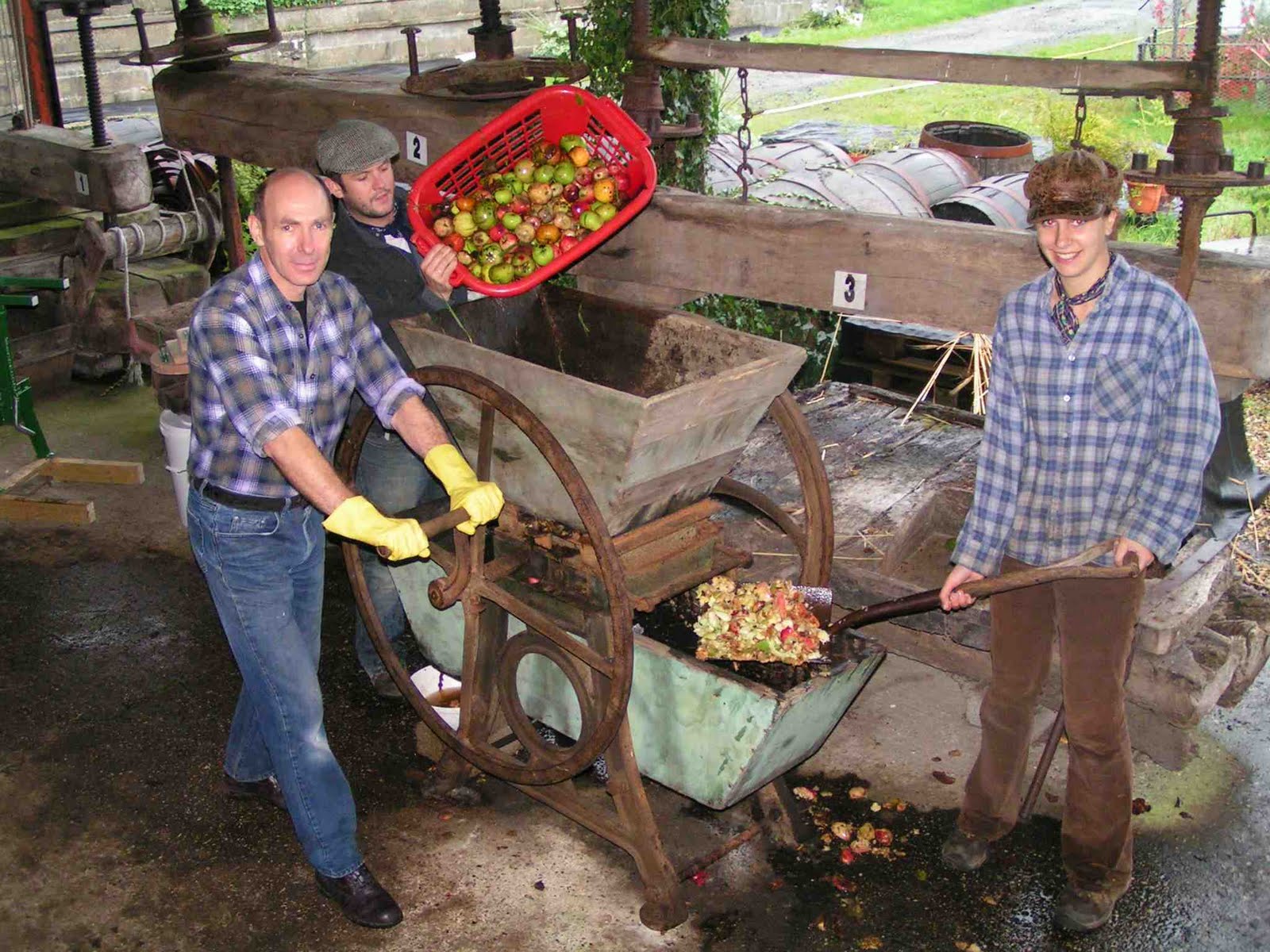
Wassail at Thatchers Cider, a private event - photo by Neil Phillips


            Old Apple Tree we wassail thee,
            And hoping thou would bear;
            For the Lord doth know
            Where we shall be
            Till apples come again another year;
            For to bear well and bloom well
            So merry let us be.
            Let every man take off his hat
            And shout out to the old apple tree!


INSTANT WASSAIL: JUST ADD CIDER
Anyone can do it. All you need is an apple tree, a loaf of bread and a couple of friends. And some cider.

1. Make mulled cider (consult The Naked Guide to Cider for an excellent recipe) and put in a bowl. In cases of extreme urgency, chuck cider in a pan, add gin as required and spice up with ginger.
2. Make toast
3. Gather pots and pans, trumpets, drums – anything that makes a noise.
4. Transport the items above to the orchard
8. Dip toast in bowl and place among branches of tree. You could send a child up the tree with the toast if you like. Or throw the toast. You’re not supposed to eat it though – it’s for the birds.
5. Raise bowl to senior tree and sing or chant the Wassail Song. You could walk round the tree if you like, or dance about. Whatever you like – it’s your wassail!
7. Bash, blow or bang your instruments. Shout and scream. Make a real old racket.
6. Drink, pass bowl, drink some more


A SHORT HISTORY…
The age of this peculiar winter rite varies depending on who you ask, but ‘waes hael’ is a Saxon expression meaning ‘good health’ and the habit of sharing a cup with friends and neighbours was imported by the German invaders in the 7th and 8th centuries. Before the Norman Conquest wassail was a village affair; on Christmas Eve revelers would go from house to house, entering by the front door, having a glug or two of mulled ale from a shared cup, singing, then leaving by the back. This is probably how the tradition of door-to-door carol singing got started.
             
When folksong collector Cecil Sharp went gathering wassail songs from around Somerset a century ago he found two dozen variations and one or two references that implied a long and unbroken history. The Curry Rivel wassail song goes like this:
            Wassail! and wassail! all over the town;
            The cup it is white and the ale it is brown;
            The cup it is made of the good old ashen tree,
            And so is the malt of the best barley.
            For it’s your wassail! and it’s our wassail!
            And it’s joy be to you, and a jolly wassail!
There follow several verses imploring “Master and Missus” for bread, cheese and cider – which, in spite of the traditional reference to beer, was almost certainly the beverage on offer. Then the last verse:
            The girt dog of Langport he burnt his long tail,
            And this is the night we go singing wassail!
            O Master and Missus, now we must be gone;
            God bless all in this house till we do come again.
            For it’s your wassail! and it’s our wassail!
            And it’s joy be to you, and a jolly wassail!
           
‘The girt dog of Langport’ refers to the Danes, who would often come up the River Parrett to attack Langport, the ancient inland port a few miles from Curry Rivel. Alfred’s defeat of the Danish leader Guthrun in 878 came as a relief to the local population, who were still celebrating it a thousand years later.
            
Shooting at trees - sound science?
 Visiting wassail still takes place in Curry Rivel and in one or two other villages, but sometime during those long centuries the main focus of the ceremony shifted from village to orchard, and people began singing versions of the familiar song. When John Aubrey went traveling around England after the Civil War he described how people in the West Country ‘Goe with their Wassell-bowle into the orchard and goe about the trees to bless them, and putt a piece of tost upon the roots’. It was also usual to bash pots and kettles or fire off guns, to awaken the spirits of the orchard.

They carried on doing this every year, unnoticed and unrecorded, until the 19th century, when working people moved in great numbers from country to town and all the old rural traditions began to die away. Before World War I there were a few farms around Minehead where wassail was still considered an essential part of country life; by 1920 the custom had all but disappeared and in the 1960s a researcher who traveled around Somerset interviewing farm cidermakers failed to find a single person who knew anything about wassail.
            
 Legend has it that the Butcher’s Arms kept the tradition alive through the century until, in 1974, it announced that lack of interest was forcing it to stop. Carhampton’s 20 orchards had fallen into neglect and were rapidly being grubbed up, so it didn’t look as though there would be anything to wassail for much longer anyway. In the end the Butcher’s Arms kept on holding its annual wassail on the evening of January 17, as it still does.
             
Thatchers wassail, a private event -
photo by Neil Phillips
A year earlier Taunton Cider had held its first wassail – which was followed by a bumper crop – starting a revival which has accelerated in the last few years. Taunton was responsible for a new addition to the wassail tradition, the choosing of a young Wassail Queen to do the toast-proffering business. 


TOP WASSAIL DESTINATIONS
These will vary year on year. Most take place on Old Twelfth Night (Jan 17) and support local charities. Some have limited space, so call ahead for info.

Butcher’s Arms           
The undisputed wassail capital of the world, this pub in Carhampton, not far from Minehead, kept the tradition alive through a long period of disinterest among the general public. They almost gave up once but kept going, and today the January festivities have acquired cult status. Unfortunately the survival of wassail has not prevented all but one of the village’s 20 orchards being grubbed up. Look out for the mulled cider made to a secret recipe that has been passed from landlord to landlord.

West Croft Farm
If you’re looking for the Glastonbury, sorry, Pilton Festival of wassail then this is it. The maker of Janet’s Jungle Juice has put the dark side of Brent Knoll on the winter party map with an exuberant fiesta of music, mild tree worship and cider. Expect a candlelit procession, roast hog and more.

Wilkins
Not to be outdone, Roger Wilkins has been wassailing for a decade now, with hundreds of people making their way down to Lands End Farm to bless his trusty apple trees – handy that they’re just across the lane from the cider barn. Look out for Chris Jagger, brother of Mick, who often performs at Rog’s shindigs.

Richs
Has the great advantage of being the easiest to get to. Tickets are a bit pricey but you get a mug of stew to soak up the cider and proceeds go to the charity picked by the Burnham Rotary Club. The Mangledwurzels have played there in the past.

Somerset Rural Life Museum
A more genteel affair, perhaps, than some of the above, but numbers are limited and tickets tend to go quickly. In the past they’ve had cider and apple juice from Hecks, apple cake and a ceilidh band. A Wassail King or Queen is chosen to lead the procession by the unusual method of hiding a dry bean in a cake. Whoever gets the bean (without choking on it) does the honours.

Barrington Court
Well-known these days for its cidermaking, Barrington Court hosts a major wassail event, complete with Mummers and Morris men. Look out for curiosities like a giant wicker apple on top of the bonfire.


This is an excerpt from The Naked Guide to Cider. In the book you'll also find answers to some intriguing questions - why is wassail usually celebrated on January 17? How is wassail good science?

Monday, 13 December 2010

Cold Nights, Hot Cider

Mulled cider is back with a vengeance this year, which can only be good news. In recent years cider has tended to be marketed and drunk as a summer drink, but it used to be enjoyed year-round in country pubs. On cold nights it was served with ginger and/or gin, heated by the simple method of plunging a red hot poker into a cup, or in a metal ‘boot’ placed in the fire. 
 
Today you might find inventive bar staff making mulled cider with the milk-steaming gadget on a coffee machine.

You can also make mulled cider at home. Any old cider will do, although proper farmhouse screech has the best flavour. The essential ingredients are cider, sugar, a dash of something stronger and some spices, especially cloves and cinnamon. Otherwise it's up to you... 

This recipe is from the National Cider and Perry Collection at Middle Farm in Sussex 

MULLED CIDER
4 pints of still, dry farmhouse cider
3 apples - washed, cored and sliced
2 oranges, washed and sliced
Juice and zest of 1 unwaxed lemon
2 tsp ground mixed spice
8 whole cloves
2 cinnamon quills snapped in half
6 tbsp light soft brown sugar

Tuesday, 26 October 2010

Inside the Cider House


In the past the way cider was drunk reflected the way it was made. Fashionable London folk of the 1660s may have drunk their Redstreak like wine, from elegant, engraved glasses, but villagers across the West Country gathered around the barrel to share the cider they had helped to make.

The barn or shed in which the cider was stored and shared was known as the cider house, a casual, non-commercial institution that was an integral part of village life – and unknown to anyone outside the village. As industrial cidermaking took off in the last decades of Victoria’s reign, draught and bottled cider was sold alongside beer in pubs around the country, and gradually the village pub replaced the cider house, even in Somerset.

For a glimpse of the old country cider house, the top destination has to be Rog Wilkins’ Lounge Bar, which is a bare, draughty room adjoining the main cider barn at his farm overlooking the Somerset Levels. The place is a bit fancier these days than it used to be, with a mural of Rog decorated one wall, but the window still has no glass in it and the chairs are a mismatched assortment of office and kitchen rejects. If this is a bit disconcerting to the uninitiated, the strangest thing is the manner in which business is conducted.

When you walk in. Rog or one of his staff asks if you want Dry, Sweet or Medium, and pours you a half pint from one of three hogsheads that stand side by side in a corner of the barn.

If it’s pressing time, the man himself will probably stop building a cheese, come over to pour you a drink, then go back to work, leaving you to enjoy your cider. You might be wondering how much it is, how you pay for it, how strong it is, and what happens next. By drinking your half are you signing up to some wholesale deal? This is a different world from the uniform, regulated world of the pub. Outside, across the road, you can see the trees on which the apples grew to make this cider. The barn is filled with the smell of apple juice and the racket of the mill. And the cider is being made right there, in front of you; you can see the physical effort that goes into the making.

November is the month to visit Wilkins, when the pressing is in full swing. In the summer the experience is more of a tourist trip, with hen parties out from Bristol and families doing the Somerset tour. Go when the old boys are sat round, gossiping about village life, on a nasty afternoon in autumn or winter.

MAKE YOUR OWN CIDER HOUSE
Cider has rarely been as commercially important as beer or wine, but that’s mostly because it’s a drink people tend to make themselves for their own pleasure. Who knows how many groups of friends and neighbours are gathered right now in sheds and garages around the country, enjoying a cup of their own cider?

Anyone can make cider, and anyone can create a cider house – it’s just the place where your cider lives. But if you really want to get into the spirit of the thing and design something a bit more stylish (imagine one of those home improvement programmes where they have to turn a 30s semi into a mock-tudor mansion while the owner’s out buying some fags) here are some tips:

Start with a shed, garage or other form of shelter, where you store the cider while it ferments and matures

Display your cider with pride – up on a shelf, not hidden on the floor behind an old bike

Get in some chairs, not a patio set but a motley collection of discarded office chairs and hospital rejects

Arrange dusty old bottles, ancient garden tools, pilfered pub ashtrays, old brooms, beer crates, out-of-date trade calendars, dead bikes and suchlike to create atmosphere

Provide a good pile of old newspapers and magazines, the more dog-eared and mildewed the better (Wilkins has this down to a T)

Fill your quart mug, switch off your phone, settle down and enjoy…


This is an extract from The Naked Guide to Cider.

Friday, 24 September 2010

Cidermaking for Beginners


Today's ciderheads aren’t content just to drink other people’s cider (and perry); increasingly they are making cider for themselves, and we’re not talking about rough old scrumpy. With a little money and rather more effort, anyone can make a delicious, old-fashioned Somerset cider at home…

It’s often said, in fact, that the best cider you will ever drink is the one you make yourself. Why is this? There may a little personal bias, but there are two other more important reasons. First, people who like cider tend to have a particular taste and, with practice, you can create a drink that suits your taste better than anyone else’s. Second, cider is much more than a glass of delicious amber liquid. It’s a process – a way of life to some people. The making, perfecting and drinking of cider is a year-round activity and one that is often sociable. Start making cider with a couple of friends, or as part of a community project, and you will be seeing plenty of your colleagues.


You start before the autumn apple harvest. As the first fruit – like the Bristol favourite Morgan Sweet – fall from the trees in September you need to make a plan. How much cider do you want to make? Where are you planning to find the fruit? Are you going to press your own apples or get someone else to do it for you? What are you going to store the juice in? Perhaps you’d like to start out by helping out with a community venture or a National Trust project, and take it from there.

In the Bristol area it isn’t hard to find either apples or equipment. Homebrew shops like Brewers Droop on Gloucester Road sell plastic fermenting vessels, airlocks and so on, or you can look online for gear. Look around and you’ll be amazed how many apples are left to rot on the ground every year, though if you want real cider apples you’ll need to do a bit more research. There are small farm orchards all over Somerset and Gloucestershire, many of them neglected or underused in spite of growing demand. If in doubt you can always press eating apples, with a few handfuls of crab apples thrown in to give the cider a bit of bite and to help it keep.


A number of cidermakers will press fruit for you, for a fee; you just go along with your apples and go home with the juice. Somerset cidermaker Neil Worley won first prize at the Bath & West Show one year with cider that he’d made in this way; he didn’t want to invest in pressing equipment so he had his apples pressed and focused on making the best cider he could.

But the more common solution is for like-minded people to get together and invest in a small fruit press and scratter. This rustic-sounding piece of equipment is a great labour-saving device, a bit like a heavy-duty kitchen blender, with a rotating blade that reduces apples to pulp very quickly. You then press this pulp in your fruit press and the sweet juice flows out. Be warned, though. Apple juice stains hard, and you will be covered in it by the end of a pressing session, so wear overalls or clothes you don’t care about.

The top supplier of cider-related equipment is Vigo, which you can find online, but at the Totterdown Press here in Bristol we use a Fruit Shark scratter, imported from the Czech Republic. It takes us, incidentally, two weekends of fairly hard work to gather and press enough apples to make 25-30 gallons of cider. Then again, a lot of that time is spent getting to orchards, cleaning equipment, and so on, so we could potentially make more in the same amount of time.

The cleaning part is especially time-consuming but absolutely vital. Ask a successful cidermaker for tips and they will insist that hygiene is essential. You can make cider out of any apples, on as large or small scale as you like, but you must ensure that equipment is sterilized and fruit washed; a plastic bin with holes in the bottom is perfect for hosing apples clean.

Think of it like this: each batch of fresh apple juice is a kind of world – an eco-system if you want to be technical. It is full of delicious sugars from the inside of the apple and, from the skin of the fruit, wild yeasts. In an ideal environment, the dominant yeast will spread rapidly through the juice, converting sugars to alcohol and carbon dioxide; dirty equipment is likely to harbour bacteria that will do nasty things to the juice. By the same token it is also essential to keep air out of the fermenting juice. Microbes called acetobacter live in fruit juice, and given the opportunity will turn ethanol (alcohol) into acetic acid, or vinegar to you and me. But they need oxygen to do this, and you can keep air out of the juice by filling containers to the very brim and fitting an air lock.

If you don’t fit an air lock you will find yourself with an extremely sticky explosion on your hands, as carbon dioxide builds up in the fermenting vessel. An air lock lets gas out, but not in.

So you plan over the summer, pick and press fruit during the autumn, keep an eye on the fermentation through the winter, rack cider into barrels in the spring, then drink the cider while you’re planning the autumn’s adventures. Then of course you might want to think about planting an orchard, or making different blends of cider, or improving your blend in some way. Before you know it, you’ve fallen into cidermaking. And it’s very hard to climb out again.

This article first appeared in The Bristol Magazine.

Friday, 10 September 2010

Britain's Oldest Cidermaker


Being a writer I'm acutely aware that people tend to look at the pictures in a book before the words. I do this myself, come to think of it. On numerous occasions I've handed somebody a book, only for them to flick through, look at the photos and say, 'This is great!'.

Which is fine, as far as I'm concerned. If a reader can be enticed into a book by good pictures they're more likely to read the words. I want my books to be as visually exciting as possible, not just because people are more likely to buy them, but also because I think a book - I mean a real book, made of paper - ought to be a thing of beauty, or of wonder.

But how do you go about matching pictures and text? Often photographers are commissioned to illustrate particular aspects of the text, but I prefer pictures - or series of pictures - that stand on their own. Photo essays, I suppose you'd call them.

When I came across Neil Phillips' pictures of Frank Naish, the Somerset farmer dubbed Britain's Oldest Cidermaker by The Sun newspaper, I knew they were exactly what The Naked Guide to Cider needed. They don't illustrate anything I wrote, but they are gorgeous pictures in which the character of the men shown, and the place where they live and work (and the photographer, who loves orchards and cidermaking), shines through.

Friday, 13 August 2010

Naked Guide to Cider Available Now!

The Naked Guide to Cider is at the printers and should be back around the end of the month. It will go on sale nationwide on 15 Sept, but you can pre-order the book now from Tangent Books.


Richard and I wrote an article on cidermaking for Issue 13 of Fork Magazine - you'll find more on this in the book plus lots of stuff about the history and culture of cider and perry, and area guides with tips on places to go and ciders to try...

The book is illustrated throughout with black and white photos, including some real old classics, and there are two colour sections with work by Neil Phillips, Bill Bradshaw, Stephen Morris, Beezer and, er, me.

Look out for the photo series on Frank Naish, aka Britain's Oldest Cidermaker.

Thursday, 29 July 2010

Bristol Harbourside Cider


This weekend's Harbour Festival has plenty to offer - including easy access to some of the world's finest cider. Come to think of it, the cider is there all the time, and you could take a very pleasant boat tour that combines great views, an opportunity to test your sea legs and car-free drinking...

Make your way to Temple Meads station and go round the back to the ferry terminal. From there you can take a boat to the Centre and trot across Queen Square to The Apple, the now-legendary bar-on-a-boat moored on Welsh Back. A swift half there, then back to the Centre and off again to the ss Great Britain.

The essential trick here is to walk past the entrance of the museum, up Gas Ferry Road to the alleyway on the right opposite Aardman's offices. Dodge down said alley, past the back of David Abel's shipyard and across the road to The Orchard, a fine local boozer with the most challenging list of farmhouse ciders in town.

If that doesn't finish you off, sail away again to the Nova Scotia, hard up against Cumberland Basin... You can sit on the quayside and enjoy a pint of Thatchers, and a very reasonably-priced one at that, then take a ferry home again...

There's more on Bristol Cider in The Naked Guide to Cider, out in September from Tangent Books...

Wednesday, 28 July 2010

Here comes The Naked Guide to Cider!


Tangent Books launches The Naked Guide to Cider on September 15, just as the apples are starting to ripen and thousands of people are asking themselves ‘I wonder if I can make cider out of those?’

The answer is a resounding Yes! and The Naked Guide to Cider shows you how to do it. The book’s premise is that anybody can make cider out of any apple. It’s that easy. Of course, to make very good cider you need very good apples and a great deal of skill and The Naked Guide to Cider contains profiles of many of the country’s most accomplished craft cider and perry makers many of whom share their tips and hints.

The Naked Guide to Cider also contains an area-by-area guide to all of Britain’s cider-making regions, chapters offering an entertaining, in-depth introduction to cider culture and history, and a comprehensive listings section which will be invaluable for makers and drinkers alike.

This is the third in the Naked Guide series alongside The Naked Guide to Bristol and The Naked Guide to Bath. It is sponsored by Thatchers, one of the country’s leading family cider makers. The Naked Guides set out to be sharp, informative and witty guide books, packed with information.

Martin Thatcher, Managing Director of Thatchers said: “The Naked Guides are a well established brand and the modern, witty but informative tone is ideal for the new generation of cider drinkers.”

Monday, 22 March 2010

Introducing... The Naked Guide to Cider


This week's Budget may well put a number of cider makers out of business - not the very very large companies of course, but the small producers who champion quality and distinctiveness. At their best, cider and perry are unique, characterful drinks, products made in particular places from particular fruit, by particular people.

Unfortunately governments work on the same scale as big businesses and tend to support them, rather than the small producer. In this instance, the health people are nagging the government to tax strong cider more heavily, in an effort to deter youngsters from drinking so much nasty white cider.

But raising the duty on strong cider will neither stop youngsters drinking nor have much effect on the companies that make white cider. They will either change the formula to bring the alcohol level below the cut-off point (probably 5.5% ABV) or make alcopops instead.

The only losers in this ill-conceived health crusade will be the artisan producers of cider and perry in Somerset, the Three Counties and elsewhere, whose undoctored, full juice drinks are naturally high in alcohol (though far less strong than wine, of course). Producers like Tom Oliver are respected the world over - but not in Whitehall.

British tourists love to drink sparkly French cider in Normandy and Brittany, and the French government recognises this. Whatever its other faults, it appreciates that fine, locally-produced food and drink attracts tourists, and it administers its duty regime accordingly.

The UK Government, on the other hand, sees only the shortest possible view: a nice headline about binge drinking and a few more quid in the coffers - until the cider makers give up and do something else.

So what better time to announce the imminent arrival (well, sort of - it's out in September) of The Naked Guide to Cider? A guide book, and more. Learn how to make your own cider and how to support the best producers of cider and perry - after this week, they're probably going to need it.

Thursday, 26 November 2009

Totterdown Press: Cider in the City


Now in its third year, the Totterdown Press makes a fine, dry cider from a secret blend of bittersharp and bittersweet cider apples gathered from orchards in Somerset and Gloucester- shire.

This year we ran into competition from Orchard Pig, which has been supporting Somerset growers by trading orchard maintenance (planting and pruning) for fruit. At least the apples have gone to a good cause.
Anyway, we still collected enough to press about thirty gallons of juice using a Fruit Shark scratter and small-ish press. A certain amount of rainwater may have found its way into the mix, but I'm sure that's all to the good. No rodents in there yet, but there's still time...

We pressed during Front Room, the annual Totterdown art trail. Fun to chat with passers-by, though we should have remembered that the weather is always terrible that weekend.

Now we wait... This year's cider should be reaching its peak in time for the launch of The Naked Guide to Cider. But that's another story