Showing posts with label orchards. Show all posts

Friday, 10 May 2013

The Big Apple at Blossomtime

Dark clouds above, cider within...
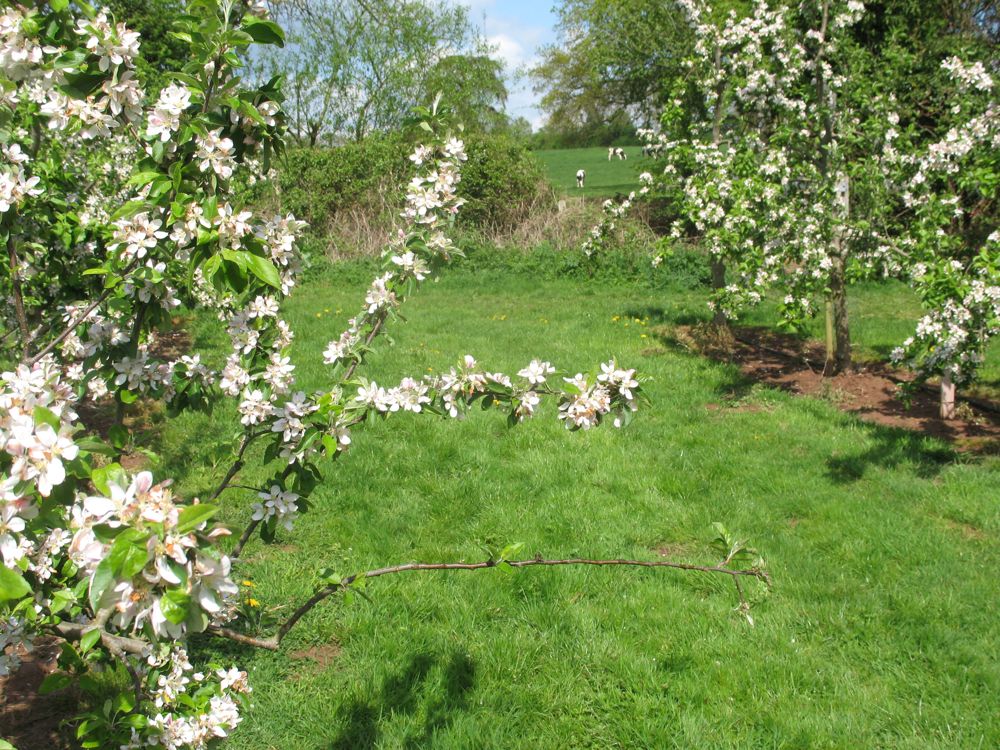
Having not been able to get to The Big Apple Blossomtime Festival in Putley (Herefordshire) last weekend I dug these photos of a previous visit out of the archive. The weather doesn't seem that different to now!

In the heart of perry country, a much-loved village hall.

Is it bigger on the inside?

Thirsty?
An ironing board put to good use for once...


There's something about corrugated iron...


Is that a scene from a David Inshaw painting in the background?

Meanwhile, back at the Hall, the Leominster Morrismen enjoy the sunshine.

Love the violinist's jacket...

Pears for heirs - a lovely old perry pear tree growing within sight of May Hill, as they're supposed to.
You can find more about the Big Apple and similar festivals, not to mention a rather nice photo of the Leominster Morrismen in The Naked Guide to Cider.

Monday, 15 March 2010

Orchard Cow


Just came across this poem by Robert Frost, who lived for a time near Dymock, north of Gloucester. The cow pictured lives in Baltonsborough, Somerset. There are few better places than these for cidermaking.

THE COW IN APPLE TIME

Something inspires the only cow of late
To make no more of a wall than an open gate,
And think no more of wall-builders than fools.
Her face is flecked with pomace and she drools
A cider syrup. Having tasted fruit,
She scorns a pasture withering to the root.
She runs from tree to tree where lie and sweeten
The windfalls spiked with stubble and worm-eaten.
She leaves them bitten when she has to fly.
She bellows on a knoll against the sky.
Her udder shrivels and the milk goes dry.

Wednesday, 4 November 2009

Days Cottage on River Cottage: Perry for Beginners


Hugh Fearnley-Whittingstall and the River Cottage crew descended on the Gloucestershire orchard of Days Cottage last month to film a segment on the fine art of making perry. It should be in the first episode of the new series, showing on 12 November.

The perry pear is a strange and wonderful thing. By tradition a tree will only prosper if planted within sight of May Hill, but a healthy tree can grow as tall as an oak, live three hundred years and produce a ton of fruit or more annually - the tree in the top picture is a perry pear. The one below, at Holme Lacy, was described in 1790 as covering three-quarters of an acre and producing 5-7 tons of fruit per year. The Blakeney Red is the best-known variety; curiously it was once used to dye military uniforms khaki...

The fruit is not for eating. Each small brown pear is a stone one day, a bag of mush the next. This is one tree you don't want to walk under in late October, when the grass underfoot is slick with pear mush and missiles are constantly dropping from above.
Perry is made in much the same way as cider, in that the fruit is first milled or 'scratted' to break it into small pieces, then pressed to get the juice out. A few months' fermentation in a barrel does the rest. A good perry is a fine drink, dry and light, and better than many wines. So good is it that the Slow Food Foundation has recognised Three Counties Perry (made in Gloucestershire, Herefordshire and Worcestershire) as the UK"s foremost artisan drink.

Try the perry made by Days Cottage (available at Bristol or Stroud farmers' markets) or Olivers.
Dave Kaspar of Days Cottage
Find out more about the county's orchards and local varieties from the Gloucestershire Orchard Group, which conserves, promotes and celebrates traditional orchards in Gloucestershire.

And if you want to know more about orchards and their history, then have a look at this.

Thursday, 8 October 2009

Thoreau's apples


"It is remarkable how closely the history of the Apple-tree is connected with that of man."


Henry David Thoreau was not a big fan of the fat, red, commercially-grown apple. He liked instead to harvest apples as he roved around the countryside, and made his own list of fruit to rival any pomona or nurseryman's catalogue:

There is, first of all, the Wood-Apple (Malus sylvatica); the Blue-Jay Apple; the Apple which grows in Dells in the Woods (sylvestrivallis), also in Hollows in Pastures (campestrivallis); the Apple that grows in an old Cellar-Hole (Malus cellaris); the Meadow-Apple; the Partridge-Apple; the Truant's Apple (Cessatoris), which no boy will ever go by without knocking off some, however late it may be; the Saunterer's Apple - you must lose yourself before you can find the way to that; the Beauty of the Air (Decks Aeris); December-Eating; the Frozen-Thawed (gelato-soluta), good only in that state; the Concord Apple, possibly the same with the Musketa-quidensis; the Assabet Apple; the Brindled Apple; Wine of New England; the Chickaree Apple; the Green Apple (Malus viridis) - this has many synonyms; in an imperfect state, it is the Cholera morbifera aut dysenterifera, puerulis dilectissima; [Footnote:The apple that brings the disease of cholera and of dysen-tery, the fruit that small boys like best.] - the Apple which Atalanta stopped to pick up; the Hedge-Apple (Malus Sepium); the Slug-Apple (limacea); the Railroad-Apple, which perhaps came from a core thrown out of the cars; the Apple whose Fruit we tasted in our Youth; our Particular Apple, not to be found in any catalogue, Pedestrium Solatium [The tramp's comfort.] also the Apple where hangs the Forgotten Scythe; Iduna's Apples, and the Apples which Loki found in the Wood; and a great many more I have on my list, too numerous to mention - all of them good.

Most of these, he goes on to say, need to be enjoyed where they are found. Indoors they lose their magic and their taste.